
LED Screen Size Guide
A practical guide to choosing LED screen size, pixel pitch and content settings for corporate events, conferences and stage productions. Use it to prepare a clearer brief before you ask for a quote.
Ready to talk now? Request an LED Screen Quote or see our LED Screens & Digital Backdrops service.
1. Start with the audience, not the screen
The right screen size comes from who needs to see it and from where. Before choosing a size, note the audience number, the seating layout, the distance from the nearest and the furthest seat to the screen, and whether people will read detailed slides or watch video and live camera. A wall that suits a gala dinner may be too small for a conference where delegates read spreadsheets.
2. Screen size and viewing distance
Two common AV rules of thumb help with a first estimate. Treat them as a starting point and confirm them against the actual room.
- Furthest viewer: for detailed content such as data slides and small text, keep the furthest seat within about 4 to 6 times the screen height. For video, live camera and large headlines, up to about 8 times the screen height can work.
- Closest viewer: the front row should not sit closer than about 1 to 2 times the screen height, or people spend the event looking up and cannot take in the whole image.
- Sightlines: the bottom edge should be high enough that people behind the front rows can see over heads, and the top edge should not push the screen into venue lighting, sprinklers or roof structure.
3. Pixel pitch: how close is too close
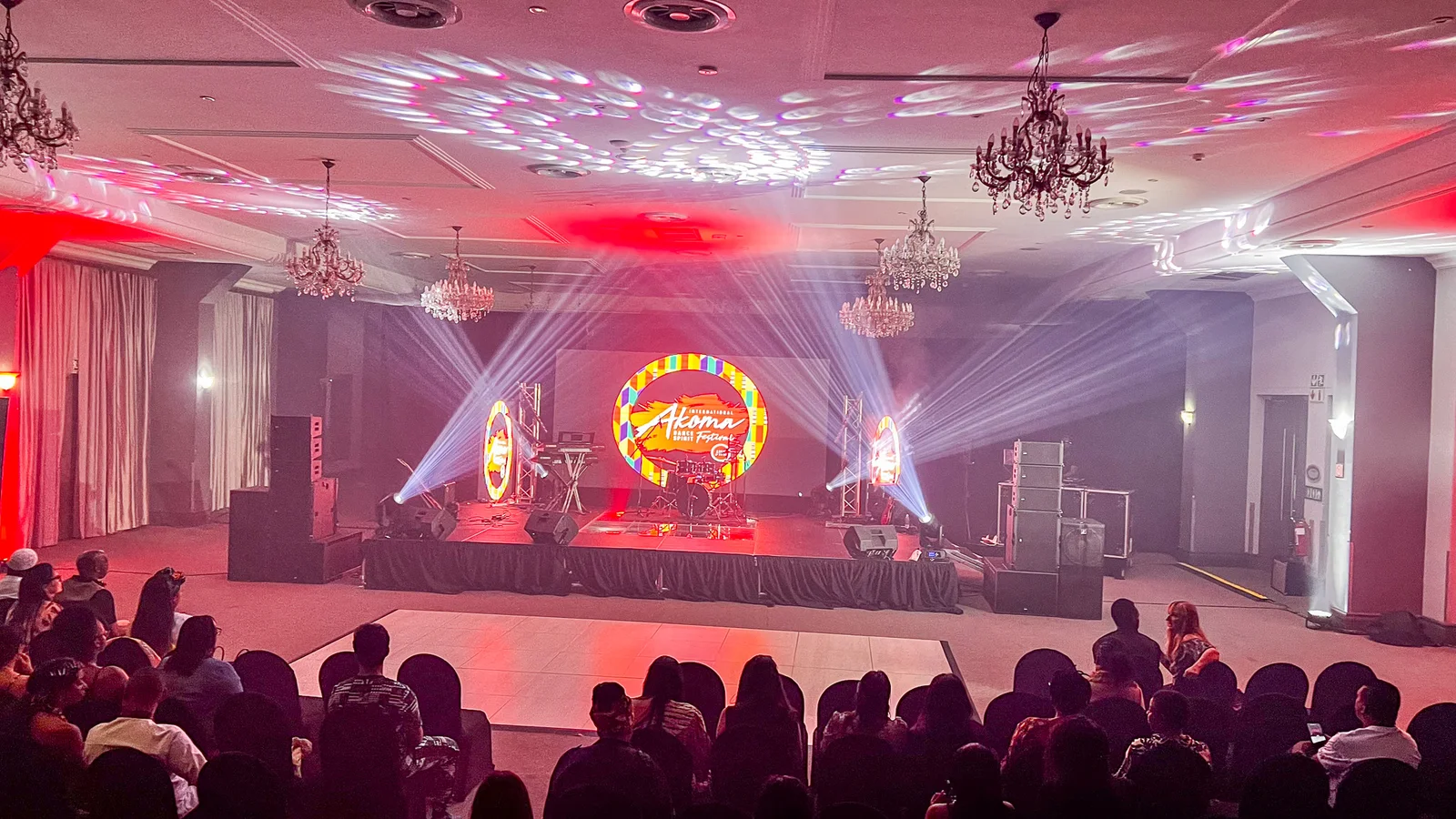
Pixel pitch is the distance between LED pixels in millimetres. A smaller pitch gives a sharper image and allows viewers to sit closer, but costs more. As a rough guide, the minimum comfortable viewing distance in metres is about the same number as the pixel pitch in millimetres, and a little more is better.
- Fine pitch (about 1.9 to 2.9 mm): close viewing, boardrooms, product launches and camera-facing backdrops.
- Mid pitch (about 3.9 to 4.8 mm): typical for indoor conferences and stages where the audience is several metres back.
- Larger pitch (about 5 mm and above): long viewing distances, outdoor stages and festivals.
Screens filmed by cameras need extra care: a pitch that looks fine to the eye can show patterns on camera. Tell us if the screen will be on a live stream or recording.
4. Indoor or outdoor
Outdoor screens must be much brighter to stay readable in daylight, and need weather protection, wind loading checks and stable ground or rigging. Indoor screens are set for lower brightness so they are comfortable to look at in a dimmed room. Tell us early if the event moves between indoor and outdoor areas.
5. Shape, cabinets and installation
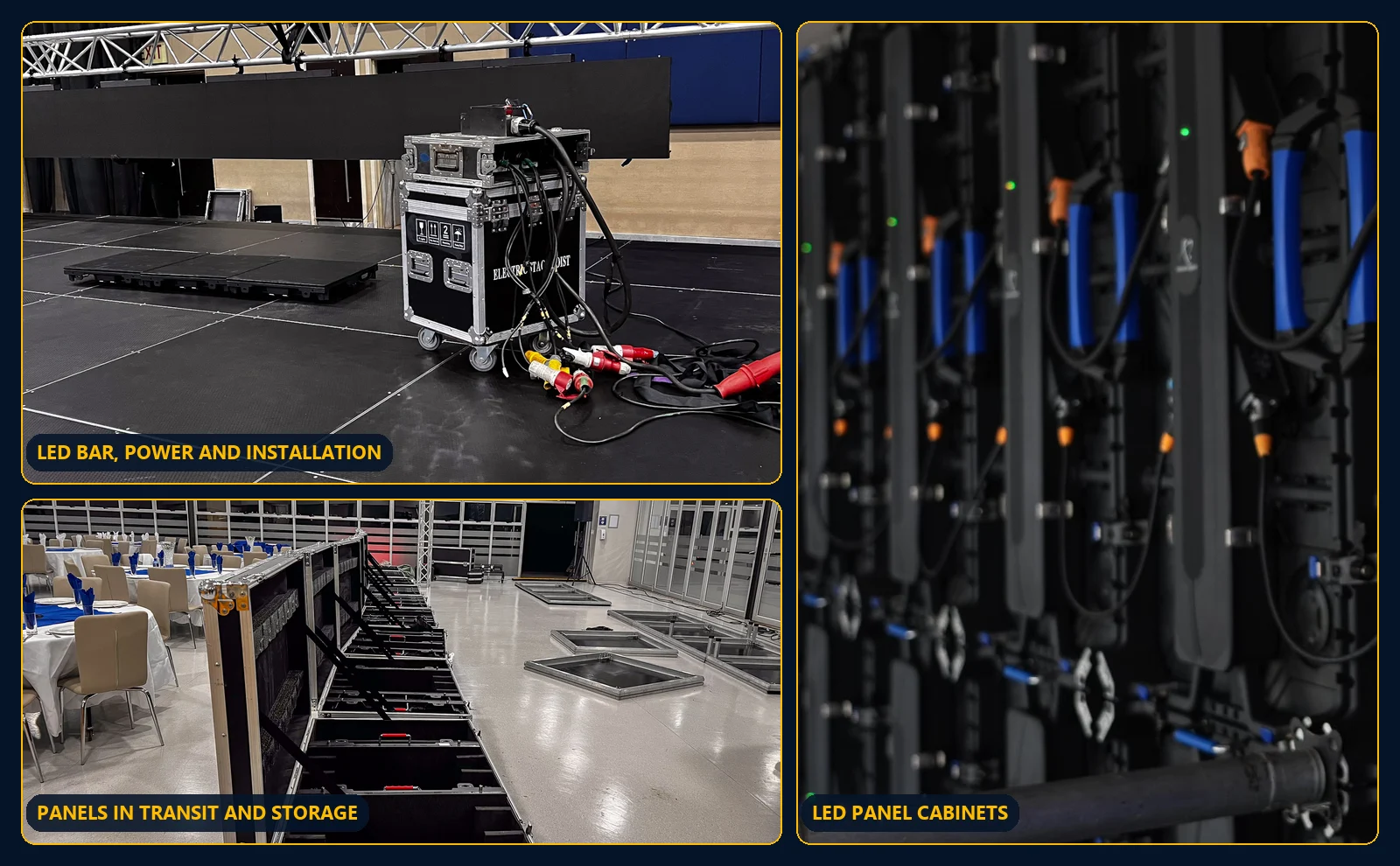
LED walls are built from modular cabinets, so the final width and height come in fixed steps rather than any size you choose. Confirm the following with the venue before finalising a design:
- Whether the screen will be flown from rigging points, ground-supported on a frame, or built into the stage set, and the load the venue allows.
- Power supply and distribution near the screen, and where the control position will sit.
- Load-in access, ceiling height and setup time available before doors open.
6. Prepare your content for the screen
Good content makes a good screen look great. A few habits make a big difference.
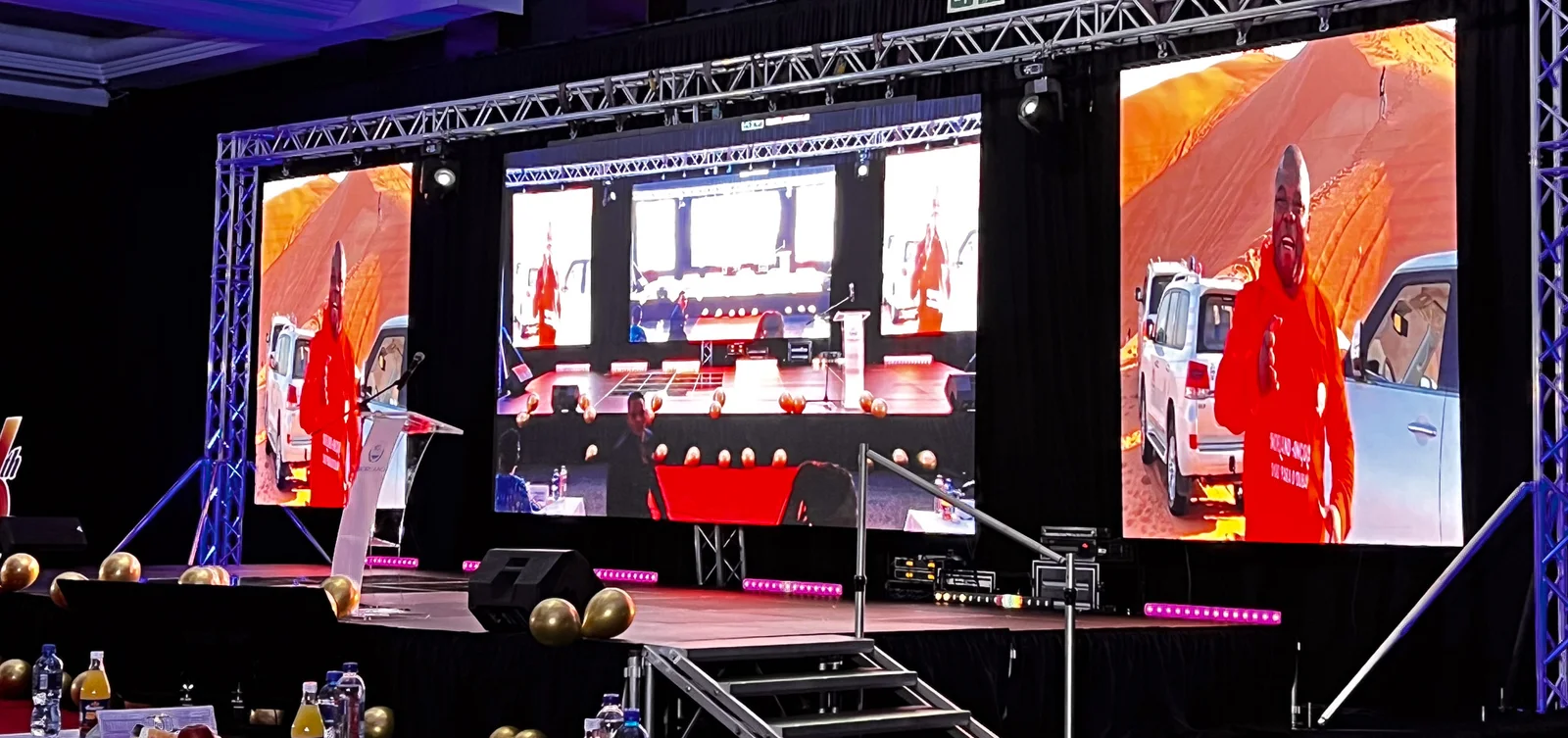
- Ask us for the screen’s resolution and aspect ratio, and build slides and videos to match. Content built for the wrong shape gets stretched or letterboxed.
- Keep text large and high contrast. If it is hard to read on a laptop from one metre away, it will be hard to read on a screen.
- Leave a safe margin around the edges so nothing important sits on the border.
- Avoid large areas of pure white, which look harsh in a dark room.
- Send final files early, in the formats we agree, and plan a content check on the real screen before the event.
What to send when you request a quote
These details let us recommend the right screen for your event and quote accurately.
- Venue name, room or outdoor area, and event date.
- Audience size and seating layout, with the nearest and furthest viewing distances if you know them.
- What will be shown: slides, video, live camera, sponsor branding.
- Whether the screen will be filmed or streamed.
- Any rigging, power or access limits from the venue.
Ready to specify your screen?
Send us the venue, audience size and what will be shown, and we will recommend the right screen and quote it.
Request an LED Screen Quote Return to LED Screens & Digital Backdrops